On June 12, the US government ordered Anthropic to suspend access to Fable 5 and Mythos 5 for foreign nationals anywhere, including foreign nationals inside the United States. Fable 5 had been generally available for three days. Mythos 5 was different: a more restricted model, available to selected government agencies and companies through Project Glasswing, with at least one Glasswing customer reportedly having access revoked before the broader order.
Anthropic concluded it had no practical way to verify citizenship on every request, so the company disabled access while it negotiated with Washington. For anyone using American AI the lesson arrived quickly: access can disappear at any moment.
A tool you can’t count on
The obvious problem is model access. Companies and governments were not only paying for intelligence, they were paying for dependability, the same way they depend on electricity, cloud infrastructure, or a working phone network. A brilliant tool that can be pulled out from under you is worth far less than a slightly weaker one that remains available when work has to get done.
AI companies know this. Reliability is part of the product, and for years that helped pull global customers toward American firms. The export order broke that assumption. These models are no longer just impressive software demos; they have become infrastructure that other countries have built into daily work.
No exemptions
Export controls are the instrument a government normally reaches for against hostile states. This order reached further and spared no friends. Britain, Germany, France, and Canada were caught by the same rule as Iran and North Korea. Britain reportedly asked to be exempted and was refused. For any country using a model from a foreign vendor, the takeaway is hard to miss: the most capable AI on the planet now ships with an off switch, and the switch isn’t yours.
Sovereign AI just stopped being theoretical
Governments have spent two years talking about sovereign AI, the drive to control their own AI capability instead of renting it from another country. Most of that conversation has been about building: national models, domestic chips, local data centers. That work is worth doing, and it is the right long game. The Anthropic suspension just made the problem very real. Depending on a foreign provider is not a distant risk to manage later. It is live now, and it can be triggered by a decision you played no part in.
The warning we should pay attention to
This incident did not erase anyone’s context. People who relied on Fable could fall back to an older model and keep working because the knowledge those systems hold about them, their work, their clients, and the way they like things done was still on the vendor’s servers. That is the reassuring read, and it should not reassure you for long.
We have just watched model access get cut off by government order, with no notice and no appeal. The memory built up inside an AI system sits under the same companies and the same governments, with no clean way to pull it out and carry it elsewhere. No one has lost their context yet. We have only learned that we could.
How to protect yourself
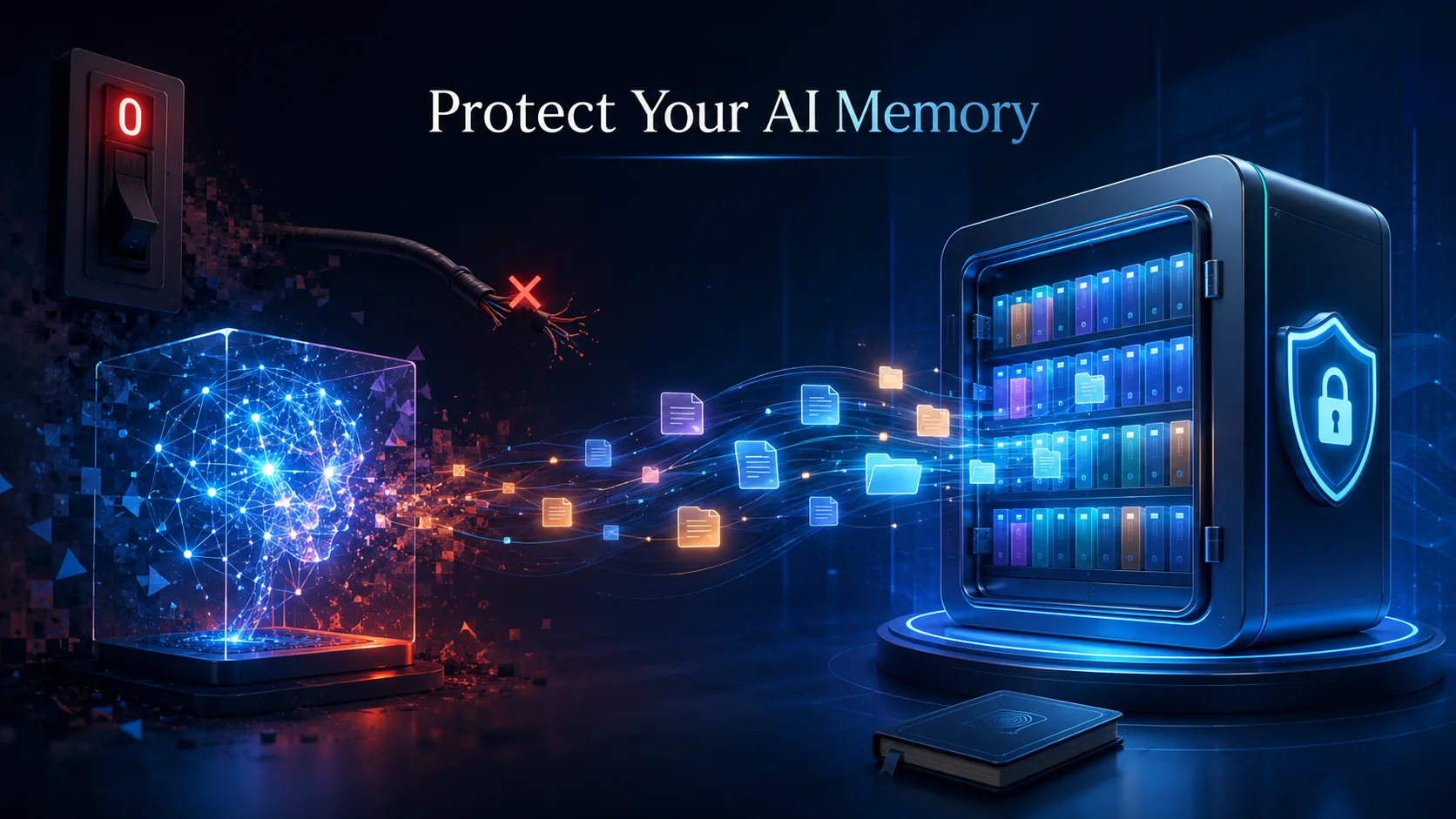
The answer starts with an independent context library: everything an AI has to know about who you are and how you work, owned by you, kept outside any single vendor, and able to connect to whatever model you choose.
When one model goes away, you connect your context library to the next best model. The model becomes a component you can replace. Your context, which only grows more valuable the longer you build it, stays with you under your control. For a country, this is a form of sovereign AI you can stand up in weeks rather than years, and it sits alongside building domestic models rather than replacing them.
We have argued that context is a key piece of AI infrastructure across the series: keep your context separate from the model vendor, because the day you need to leave is the day you find out you can’t. Hold it separately and leaving costs you nothing.
That is what we are building at Bot Food: a context library you own, designed to feed whatever AI is doing your work this month. Your context stays yours. The model can change. One personal context library, any model.
The next one could be much worse
Fable was a cheap way to learn the lesson. Most people were only days into Fable 5, with little built up and a solid model to fall back on. It gets more expensive from here. A year or two out, the assistant that disappears could be the one that has known your work since you started, and the next best option could be a real step down.
You can’t know which provider goes dark next, or when, or on whose order. What you can do is keep your context in your own hands, so that when a model disappears, you lose a tool for an afternoon and nothing else.
The Context Layer: your regular briefing on personal context in AI and the fight for your digital memory. Read the full series at ralhf.ai/blog.