Every AI company spent the spring and summer promising the same product: an AI assistant that works for you around the clock, notices what needs doing and takes care of it before you ask. Not one of them has put that assistant in the hands of ordinary people, and the reason is more basic than anyone in the industry expected.
On February 15 Peter Steinberger, creator of OpenClaw, a free do-it-yourself AI assistant that had gone viral among developers a month earlier, announced he was joining OpenAI to "build an agent that even my mum can use." Sam Altman said the same day that this work would "quickly become core to our product offerings." At a conference in Tokyo on March 31, Steinberger called 2026 "the year of the general agent." In August Mark Zuckerberg wrote that soon everyone will have an assistant working on "your relationships, health, career, finances, home management, hobbies, and more."
Nobody said a year. In an industry where models leapfrog each other every few weeks, everyone heard six months, and we heard it too. It’s September, and the agent for your mom is nowhere.
What arrived instead was better context
What the labs shipped over those six months was a steady upgrade to the background their assistants work from, the context that lets an AI do a task properly instead of guessing. OpenAI’s desktop app can now record what you do on your Mac and write notes the assistant uses later. Anthropic’s Claude carries what it learns in one task into the next, and lets you read and edit the list. Google, Microsoft and Perplexity shipped their own versions, each one a better way of briefing the assistant before it starts work.
That is real progress on a problem this series has followed since the beginning, and it makes the assistant you already talk to more useful on the jobs you already hand it. The assistant still sits there until you type. Google’s Spark, sold since July to paying subscribers in the US, comes closest, and what it does each morning is read your Gmail and calendar and tell you what is in them. A summary is not an assistant that handles the day.
The assistant that needs looking after
OpenClaw remains the nearest thing anyone has to the promise, and the people who ran it for months describe the same terrible experience. Carly Taylor, a Crunchyroll vice president and one of its early champions, said it "had become a full-time job to maintain." Radek Sienkiewicz, after 50 days running one, rated it doing anything involving a web browser at five out of ten and said even those tasks "need babysitting." Microsoft’s version, Scout, is for businesses only and still in testing. Meta’s, called Hatch, has not launched.
The babysitting gives the game away, because these assistants make mistakes a person with ordinary common sense would never make, and when you correct one, the correction does not stick, so you make the same fix again tomorrow. Today’s AI models learn during training and then stop, and whatever they pick up from working with you is gone when the task ends. Researchers call the missing piece continual learning, an AI that improves from its own experience the way a new employee does, without waiting for its makers to ship a new version. Is that what it will take to deliver the promise? Possibly, and nobody has built it.
Brilliant at code, stumped by a car wash
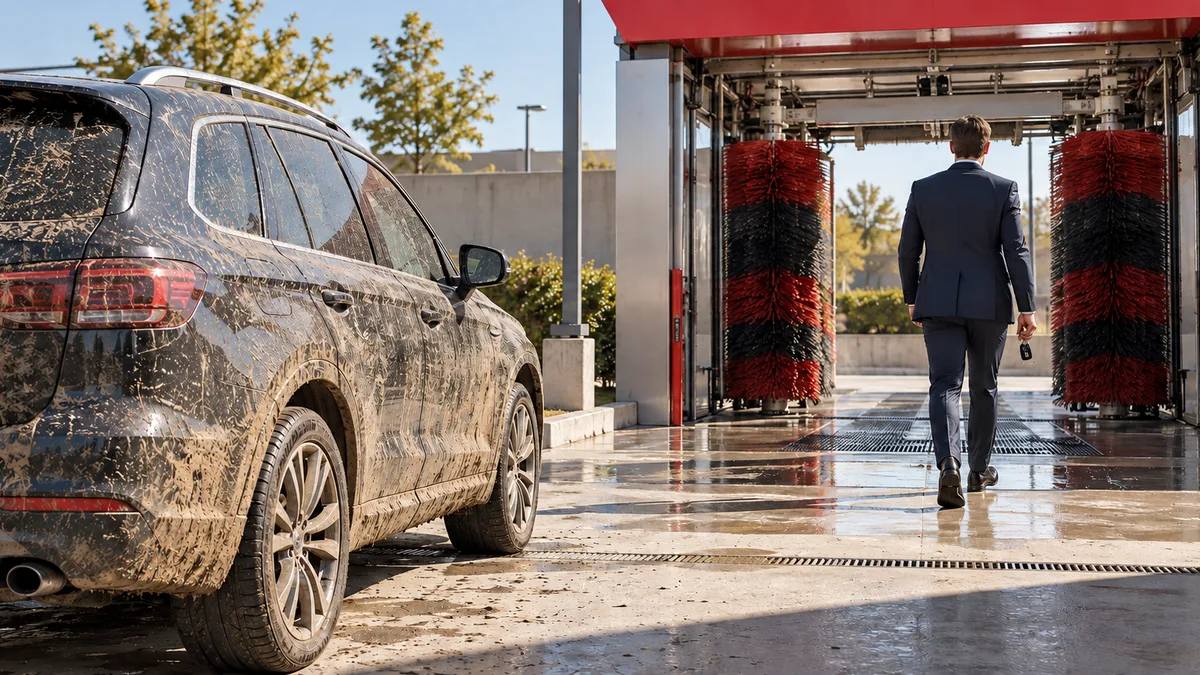
Andrej Karpathy, a founding member of OpenAI who later ran AI at Tesla, described the problem better than anyone at a Sequoia Capital event in April. On the software code that AI writes for him, he said it’s so good that, "I can’t remember the last time I corrected it." Then he described the same AI failing a question a child could answer: your car wash is 50 metres away, do you walk or drive? The system that writes great software all day will tell you to walk to the car wash and leave your car behind.
The reason is what these systems were trained on. Software either works or doesn’t, and a math answer is right or wrong, so an AI can try millions of times and be told, instantly and automatically, which attempts worked. Most of life has no answer key. Nobody can grade a million attempts at getting the kids to school on time, so the models never got the practice. The people building them have started admitting to this limitation. On July 2 Zuckerberg told Meta staff that progress on these assistants "hasn’t really accelerated in the way that we expected." A Princeton study presented at a major AI conference in July found that "recent capability gains have only yielded small improvements in reliability." The models keep getting smarter on the tests, and no better at the car wash.
We have watched this movie before
In August 2016 Ford announced it would have a fully self-driving car on the road by 2021, with no steering wheel and no pedals. A month earlier Elon Musk said a Tesla would drive itself from Los Angeles to New York by the end of 2017. These were serious companies with working prototypes, and the highway demos were convincing enough that most of the car industry published a similar date.
The first driverless rides open to the public came from Google’s Waymo, in one suburb of Phoenix, in October 2020, and the service only reached real cities in the last two years, nearly a decade after the promises. The highway turned out to be the easy part, because the hard part was the stopped school bus and the traffic cone in the wrong place, the situations nobody had trained for. Every hot tech wave goes through this. The demo works, the insiders extrapolate, and the last stretch takes longer than everything before it. The whole AI industry did that this year.
It will come, later than we all expected
The assistant that runs your life needs two things: an AI that can handle a situation it has never seen, and your personal context, the deep knowledge of your life that tells it what your preferences are. The context is well on its way, as the summer’s upgrades show. The AI is the part nobody has, and no amount of knowledge about you fixes a model that cannot decide whether to walk or drive to the car wash.
The agent for your mom will arrive, later than the industry said. When it does, it will run on your context, and building that context library so it is ready for the day the models catch up is what we work on at Bot Food.
The Context Layer: your briefing on personal context in AI and the fight for your digital memory. Read the full series at ralhf.ai/blog.